


Litio Store
AC Combiner Box 20 A Single-Phase with Type 1+2 SPD
AC Combiner Box 20 A Single-Phase with Type 1+2 SPD
Regular price
€151.52
Regular price
Sale price
€151.52
Unit price
per
Couldn't load pickup availability
- Prices exclude VAT: tax is calculated in the cart based on the delivery country.
- EU businesses: 0% VAT with a VAT number valid in VIES — the field appears at checkout, below the delivery address.
- Reduced 10% VAT on solar and storage for customers in Italy: write to us before ordering.
AVAILABILITY
Product available, quantity not tracked
Shipping
- Italy: €13 on orders up to €150, free shipping over €150.
- European Union: 60 € per order, with no threshold
Rates apply to the cart total and are confirmed at checkout, where shipping to countries outside the EU is also calculated.
Delivery in 10-20 daysCombiner boxAC sideLitio Store
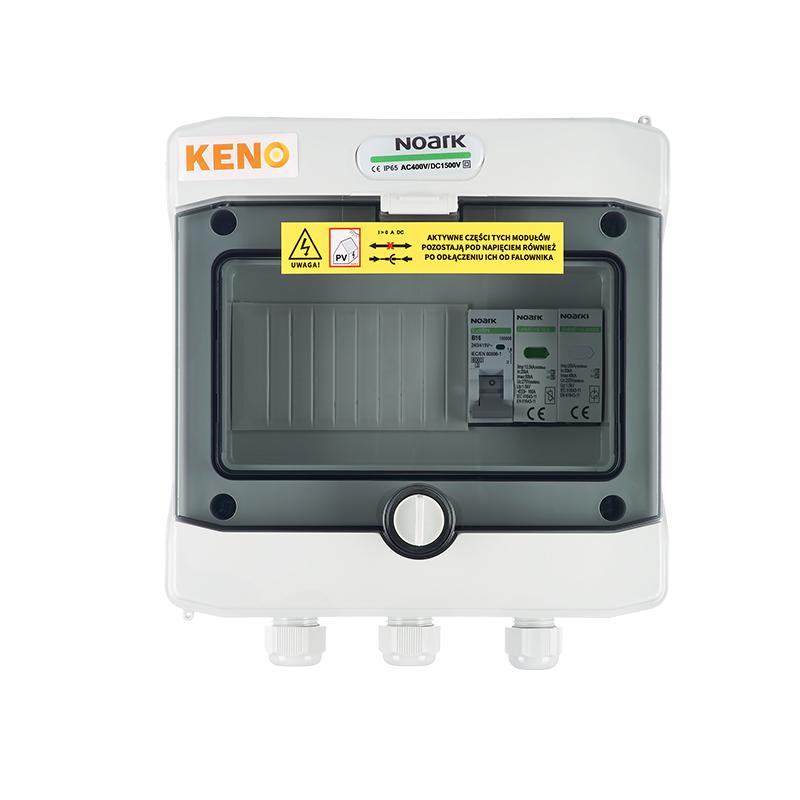
AC Combiner Box 20 A Single-Phase with Type 1+2 SPD
Alternating current combiner box for single-phase photovoltaic systems, to be installed on the AC side between the inverter output and the distribution board. It differs from the basic version in its combined Type 1+2 surge arrester, intended for buildings equipped with a lightning protection system (LPS) or otherwise exposed to the risk of a direct lightning strike on the structure or on the incoming lines.
Inside are a 20 A miniature circuit breaker, which protects the AC line against overload and short circuit and allows the inverter to be isolated, and a Type 1+2 surge protective device: a single device able both to discharge the lightning current (10/350 waveform) typical of Type 1 SPDs and to limit the residual transient surges (8/20 waveform) like a Type 2 SPD. The 20 A size on a 230 V single-phase grid covers inverters up to roughly 4.6 kW.
Key features
Combined 1+2 surge arresterA single device performs the functions of both a lightning current limiter and a transient surge arrester.
For buildings with a lightning rodA solution suited to buildings with an LPS or exposed to the risk of a direct lightning strike on the incoming lines.
20 A circuit breakerIt protects the AC line between the inverter and the main board against overloads and short circuits.
For single-phase inverters20 A on a 230 V grid: a size suited to inverters with an indicative power output of up to about 4.6 kW.
Pre-wired and compactEnclosure measuring 202 × 201 × 120 mm and weighing 1.2 kg with components already fitted and connected.
Inverter isolationThe circuit breaker makes it possible to isolate the inverter from the grid for maintenance and inspections.
Technical specifications
| Feature | Value |
|---|---|
| Switchboard type | AC combiner box for photovoltaic systems |
| System side | Alternating current (AC), between the inverter and the distribution board |
| Number of poles / phases | Single-phase (L + N) |
| Nominal current | 20 A |
| Indicative inverter power | Up to approx. 4.6 kW (230 V, 20 A) |
| Surge protective device (type) | Type 1+2 SPD (class I + class II, combined) |
| Miniature circuit breaker (MCB) | Yes, 20 A |
| Residual current device (RCD) | Not present |
| Dedicated isolator switch | Not present: isolation is provided by the miniature circuit breaker |
| Dimensions | 202 × 201 × 120 mm |
| Weight | 1.2 kg |
| Reference standards of the components | EN 61643-11 (surge protective devices), EN 60898-1 (miniature circuit breakers) |
Installation and wiring must be carried out by qualified personnel in accordance with the applicable standards and the electrical design of the system.